
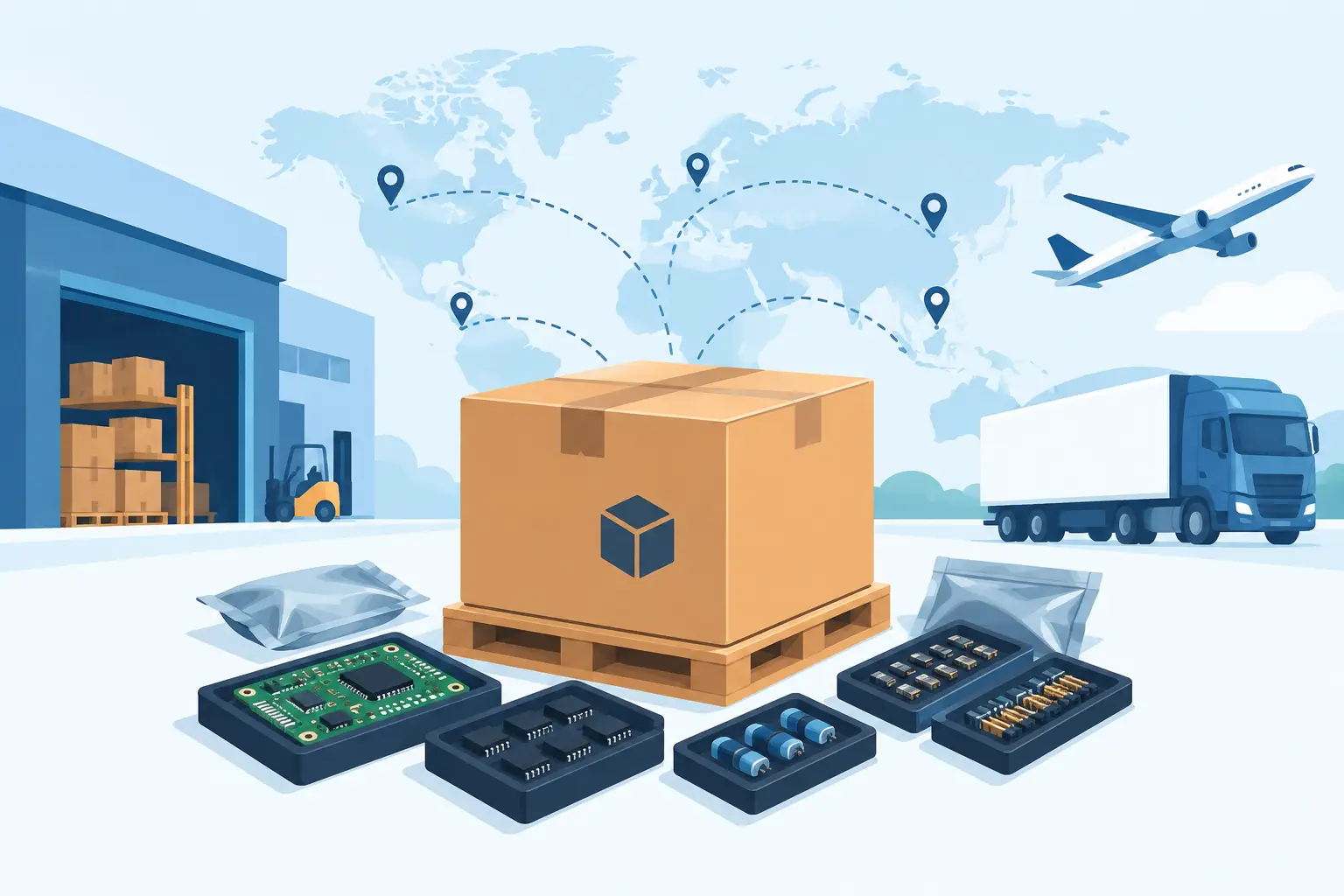
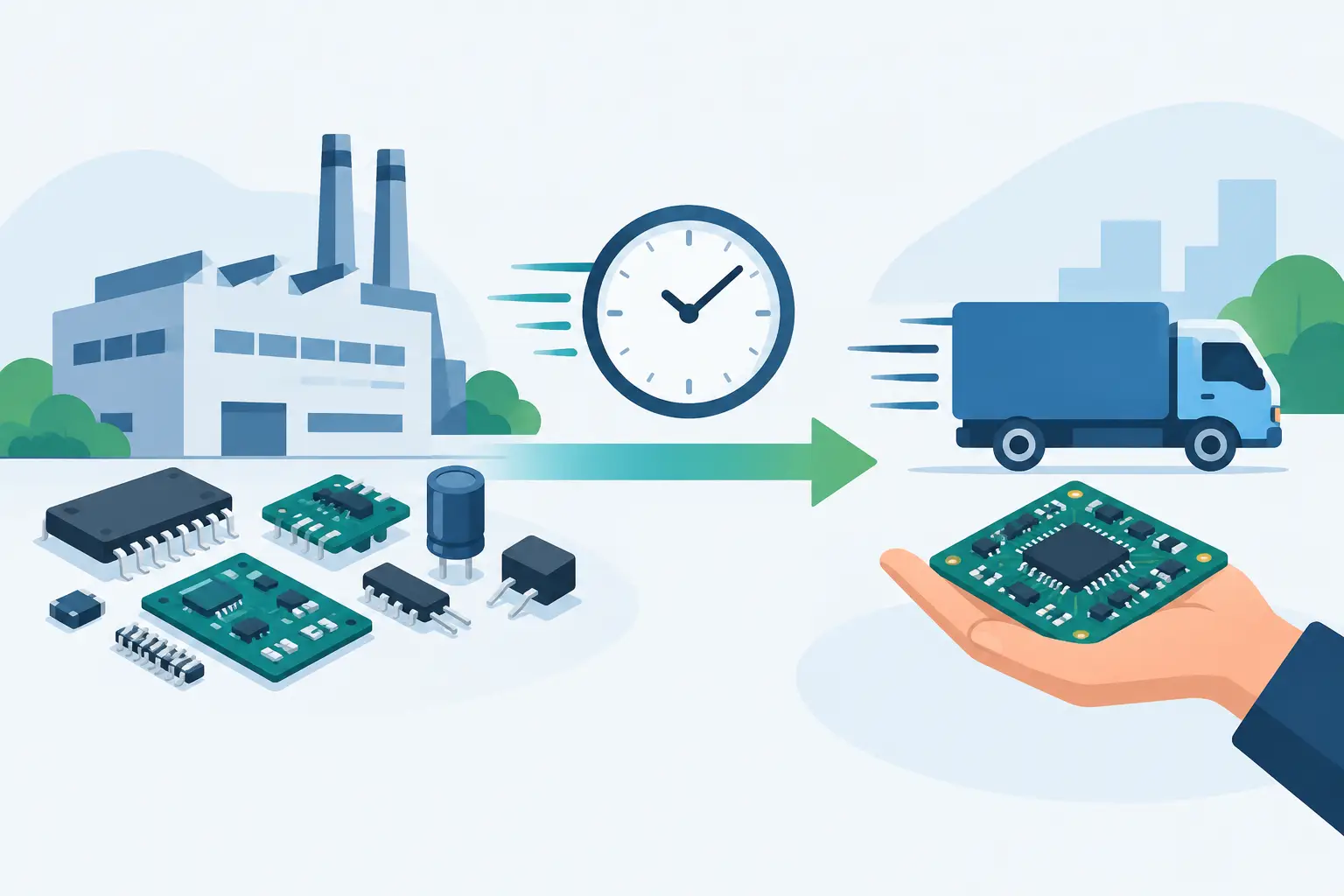
Consolidated deliveries for electronic components reduce inbound complexity, protect part condition and align supply precisely against production plans.

Production Kitting for Electronics Manufacturing
A production line rarely stops because of one dramatic procurement failure. More often, it stops because a build is short by a single connector, a reel has arrived without the required traceability, or materials have been delivered in the wrong sequence. Production kitting for electronics manufacturing addresses these operational gaps by bringing the right approved components together, in the right quantities and condition, for a defined build.
For OEMs and CEMs, a kit is not simply a box of parts. It is a controlled link between the bill of materials, purchasing activity, warehouse handling and the production schedule. When managed properly, it reduces material uncertainty at the line and gives procurement, planning and engineering a clearer view of whether a build is genuinely ready to start.
What production kitting means in practice
Production kitting is the process of sourcing, receiving, checking, storing and consolidating electronic components against a specific BOM and production requirement. Components may arrive from multiple manufacturers, franchised channels and specialist sources, but are prepared for delivery as a complete, identifiable kit or as scheduled kit releases.
The aim is not necessarily to buy every line from one supplier. In electronics, that is often unrealistic, particularly where parts are allocated, subject to extended lead times or approaching obsolescence. The value comes from managing the BOM as one manufacturing requirement, rather than leaving the customer to chase individual purchase orders, deliveries and shortages across several sources.
A properly managed kit should reflect the approved manufacturer part number, revision-controlled BOM, required quantity and agreed build date. It should also account for practical realities such as minimum order quantities, reel multiples, attrition allowance, customer-owned stock and long-lead items that need to be secured well before the rest of the material is required.
Why production kitting for electronics manufacturing matters
The principal benefit is production continuity. Assembly teams need confidence that material released to the line is complete, suitable for use and available when planned. A partial delivery can be useful for a prototype or an urgent rework requirement, but it can create avoidable disruption when it is mistaken for a production-ready kit.
Kitting also reduces administrative load. Instead of reconciling many supplier acknowledgements, courier deliveries and invoice lines against one BOM, the purchasing team has a consolidated view of kit status. Exceptions become visible earlier: a component is unavailable, a quoted lead time has changed, a substitute requires engineering approval, or a line is at lifecycle risk.
There is a financial benefit too, although it requires sensible control. Consolidated deliveries can reduce inward-goods activity, expedite costs and line-side handling. They can also prevent excess purchasing caused by fragmented ordering. However, holding material ahead of demand ties up working capital, so the right arrangement depends on forecast confidence, storage requirements and the cost of a missed build.
Kitting begins with a healthy BOM
A kit can only be as reliable as the BOM it follows. Before sourcing begins, the BOM should be checked for manufacturer part numbers, quantities, approved alternatives, lifecycle status and specification ambiguities. Descriptions alone are not enough. Similar-looking components can differ in package, tolerance, temperature rating, termination finish or approved manufacturer.
BOM health checks are particularly valuable where a design has been in service for several years. A line that was readily available at the point of design may now be obsolete, allocated or supplied with a lead time that does not fit the production plan. Identifying these exposures before a purchase order is placed gives engineering and procurement more time to assess alternatives or make a last-time-buy decision.
The same discipline applies to substitutions. An alternative component may be electrically suitable, but it should not enter a production kit without the appropriate technical approval and clear documentation. Uncontrolled substitution transfers risk from procurement to the factory floor, where the consequences are harder and more costly to resolve.
The difference between parts availability and build readiness
A BOM may appear largely available while the build remains at risk. If 98 per cent of lines are covered but one critical microcontroller is unavailable, the practical completion level is zero. Equally, material may be available in the market but unsuitable because provenance cannot be established or the packaging and condition do not meet production requirements.
Build readiness therefore needs a line-by-line assessment of criticality, quantity, delivery date and quality status. This is especially relevant for active components, moisture-sensitive devices and parts sourced outside standard franchised channels. Procurement teams need a realistic status, not a percentage that masks one line-stopping shortage.
Quality controls do not stop at goods-in
Electronic components can be damaged or compromised long before they reach an assembly line. ESD exposure, poor storage conditions, mishandling and moisture ingress can all affect component integrity. For this reason, production kitting should include controlled receiving, inspection and storage, not simply consolidation.
Sensitive parts should be handled in ESD- and FOD-compliant facilities. Moisture-sensitive devices require attention to moisture barrier packaging, humidity indicator cards and, where appropriate, vacuum sealing. Environmental storage controls and clear stock identification help preserve component condition while material is held for a scheduled build.
Traceability is equally important. Manufacturers and CEMs must be able to reconcile material to the relevant purchase and delivery documentation, particularly when working with quality-controlled products, regulated applications or customer-specific requirements. The appropriate level of inspection depends on the component, source and end use, but the process should always be proportionate to the risk.
Choosing the right release model
Not every programme needs the same kitting arrangement. A low-volume, high-mix manufacturer may require fully consolidated kits for individual works orders. A higher-volume programme may benefit from staged releases, where long-lead components are secured and stored early, then released with the balance of the kit against a call-off schedule.
Customer-owned stock can also form part of the arrangement. This is useful where an OEM has already purchased strategic components but needs them stored, controlled and combined with sourced material for assembly. Clear ownership records, stock reconciliation and agreed rules for excess material are essential in these cases.
The choice comes down to demand stability and operational priorities. Full kits provide strong build control, but can increase stored inventory if schedules change. Just-in-time releases reduce stock holding, but leave less margin for supply disruption. For many electronics programmes, a hybrid approach is more practical: secure the highest-risk parts early, monitor the remaining BOM and consolidate against the confirmed build plan.
Where production kitting commonly fails
Most kitting failures are process failures rather than warehouse failures. A late BOM revision, an unapproved alternate, missing attrition allowance or unclear delivery instruction can undermine an otherwise well-sourced kit. The remedy is disciplined communication between engineering, purchasing, planning and the kitting partner.
Four controls make a material difference:
- A single current BOM revision, with approved manufacturer part numbers and alternatives clearly identified.
- A defined kit status that distinguishes sourced, received, quality-checked and ready-to-release material.
- Early escalation of constrained, obsolete or allocated lines rather than waiting for a promised delivery date to slip.
- Agreement on packaging, labelling, traceability, excess stock and delivery requirements before the first build.
These controls are straightforward, but they prevent the common situation in which every party believes the material is ready and production discovers otherwise.
A managed extension of purchasing and production
The most effective kitting partner works as an extension of the customer’s purchasing and production function. That means understanding which lines are critical, which dates cannot move and where the BOM carries lifecycle or supply risk. It also means giving clear, timely information when a plan needs to change.
At SeSemi, complete production kitting is supported by BOM management, specialist sourcing and controlled storage for production-critical components. This allows material from multiple sources to be brought under one managed process, while preserving the handling, traceability and delivery discipline required for electronics manufacture.
A well-prepared kit does more than arrive complete. It gives the production team a dependable basis for committing labour, machine time and customer delivery dates. When component supply is uncertain, that assurance is often the difference between a controlled schedule and a preventable interruption.

Related Posts
Comments (0)